
Why I Chose to Stay in Singapore After My SMU Exchange
Australian New Colombo Plan Scholar Lilou Lauret reflects on studying law at SMU, exploring South-East Asia and choosing to stay in Singapore for another six months after her exchange.
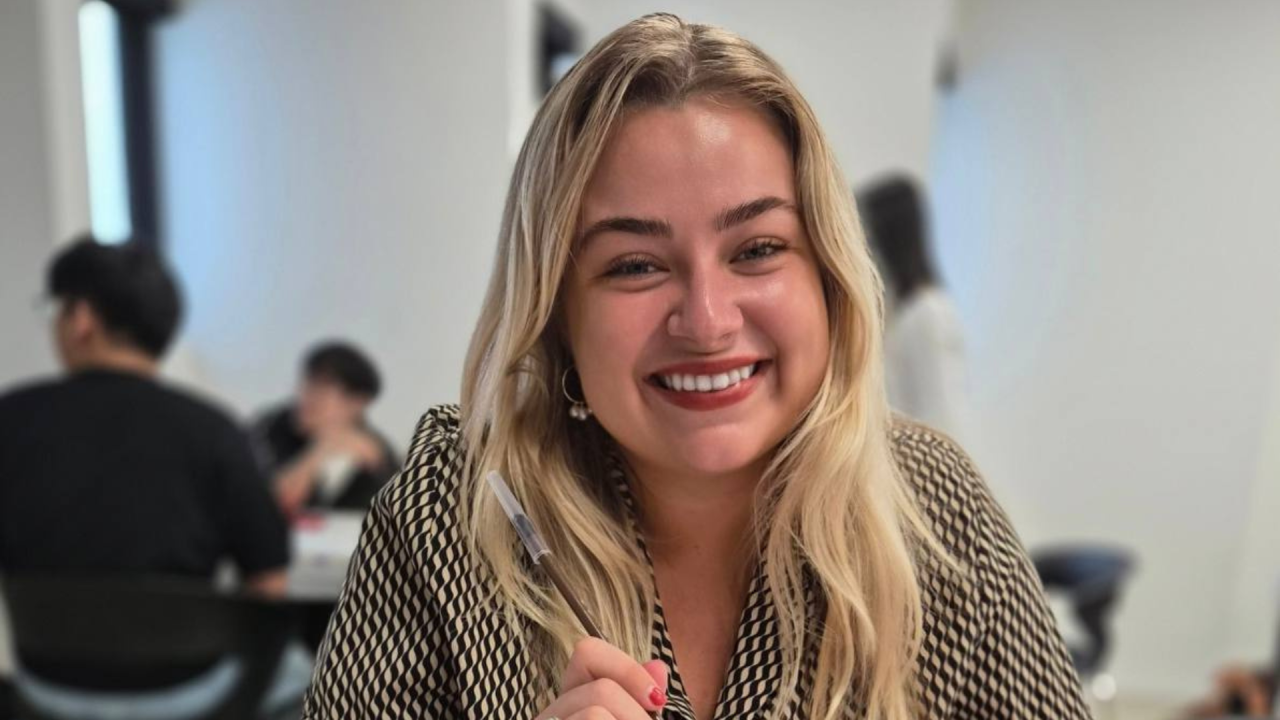
Lilou Lauret arrived at Singapore Management University (SMU) expecting to spend one semester studying law. Six months, four courses and eight countries later, the Australian New Colombo Plan Scholar had secured a Work Holiday Pass so she could remain in Singapore for another six months. She shares the classes, friendships and regional experiences that made her want to stay.
How would you sum up your six months at SMU?
Finding the right words to capture the experience feels almost impossible. Those months ended up being some of the busiest and most fruitful of my life. Reading four challenging law courses while travelling across eight countries was no joke, but I made friends from around the world, forged lasting memories and had some of the most interesting conversations.
Some of the moments I remember most happened in class, during conversations with other students or while taking part in programmes beyond the classroom.
Looking back, SMU gave me far more than an academic experience. It helped me grow as a global citizen, form meaningful relationships and gain the confidence to navigate an increasingly interconnected world.
What was it like studying law at SMU?
I studied Employment Law and Regulations, Intellectual Property Law, Medical Law and Health Policy, and Psychology and the Law. They complemented my combined studies in Law and Biomedical Science and let me explore familiar issues from a different legal and cultural context.
The style of learning was also different from what I was used to. Classes emphasised interactive discussion, critical thinking and applying legal concepts to practical situations. Learning alongside students familiar with different legal systems made me think more carefully about how law operates within its wider social, economic and cultural setting.
Was there a classroom moment that particularly stayed with you?
One of the most memorable was a guest session with former judge and experienced legal practitioner Su Ann Wong. She spoke candidly about her journey in private practice and public service and shared some of her legal ‘war stories’. Hearing those real-world experiences connected what we were learning in class to the realities of the profession.
How did you get involved beyond the classroom?
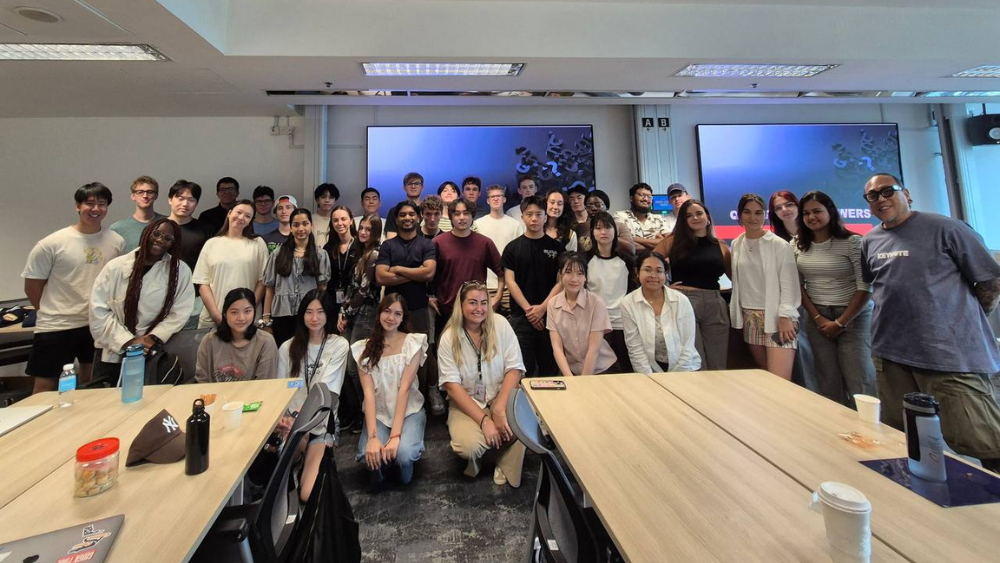
I completed the Exchange Student Ambassador (ESA) Training with 44 exchange students representing 18 countries. Our weekly workshops covered intercultural communication, emerging digital technologies and Singapore’s multicultural society.
The sessions were useful, but the people made the experience. Spending time with such an international group gave us space to compare perspectives, ask questions and learn from one another. It also created friendships that became a big part of my life in Singapore. Becoming an Exchange Student Ambassador encouraged me to take an active role in my exchange rather than simply attend classes and wait for things to happen.
What stood out from the SMU EdVenture programme in Hanoi?
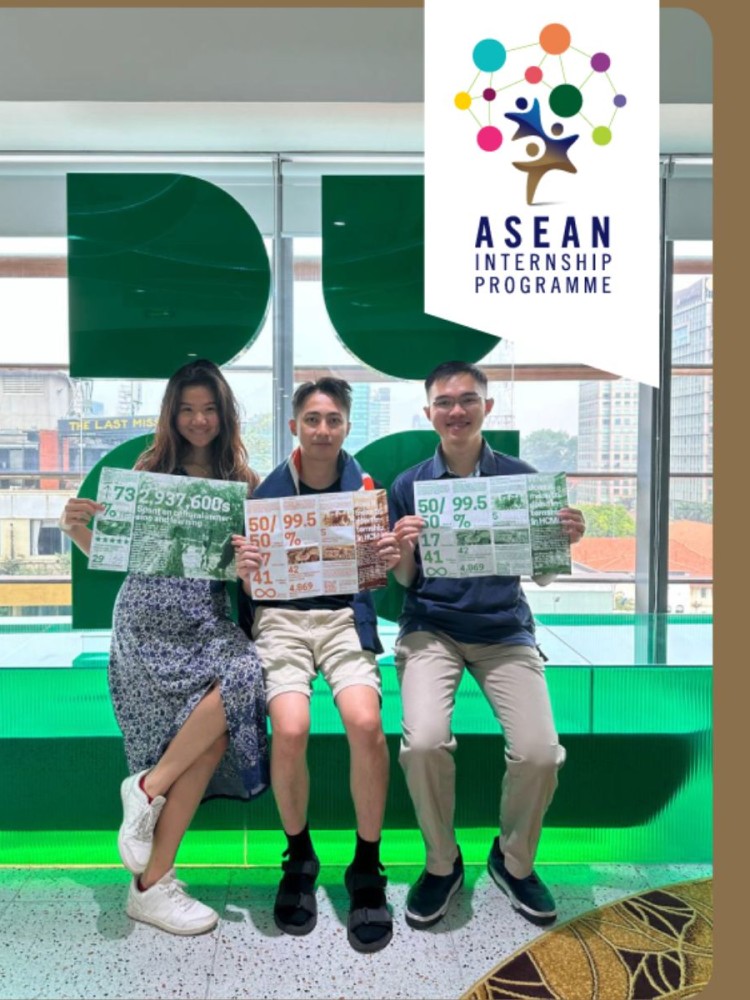
I travelled to Hanoi with 25 local and international exchange students for the programme, which was hosted by British University Vietnam. Through academic workshops, industry visits and discussions with Vietnamese and Singaporean students, I learnt more about Singapore–Vietnam relations and Vietnam’s rapidly developing economy.
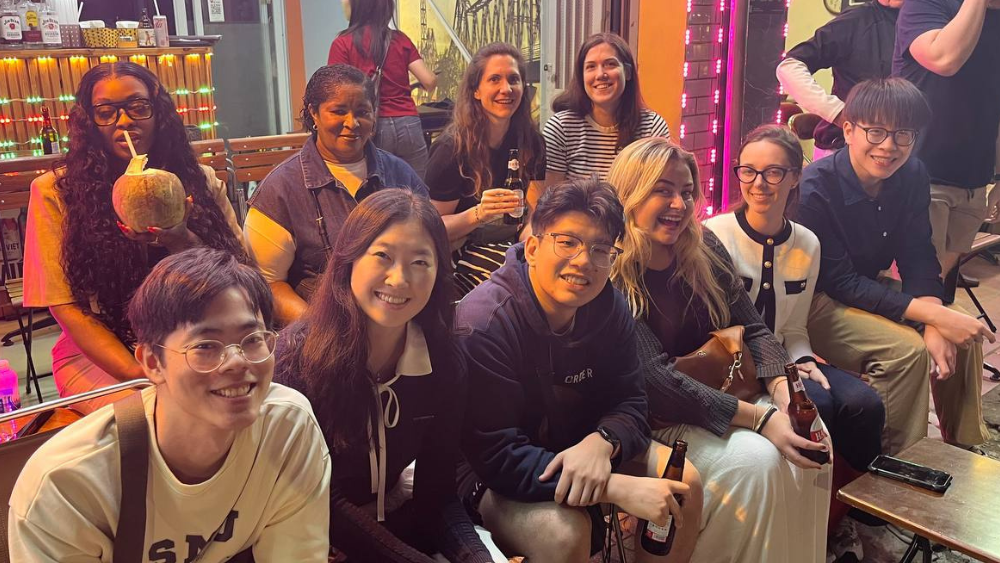
At FPT Corporation, a Vietnamese technology group specialising in digital transformation, we worked in multicultural teams on a case study exploring ideas related to the 2026 Singapore FinTech Festival. It was interesting to see how differently people approached the same brief and how much stronger the discussion became when those perspectives came together.
We also visited the Embassy of Singapore in Hanoi, where representatives from Singapore’s Ministry of Foreign Affairs spoke about diplomacy, regional cooperation and Singapore–Vietnam relations. As someone interested in an international legal career, hearing directly from people working across these areas brought together many of my interests in law, business and international relations.
How did being based in Singapore shape your experience of the region?
Singapore gave me a base from which to experience more of South-East Asia and the wider Indo-Pacific. Over the semester, I travelled through Malaysia, Indonesia, Thailand, Taiwan, Cambodia, Vietnam and Sri Lanka.
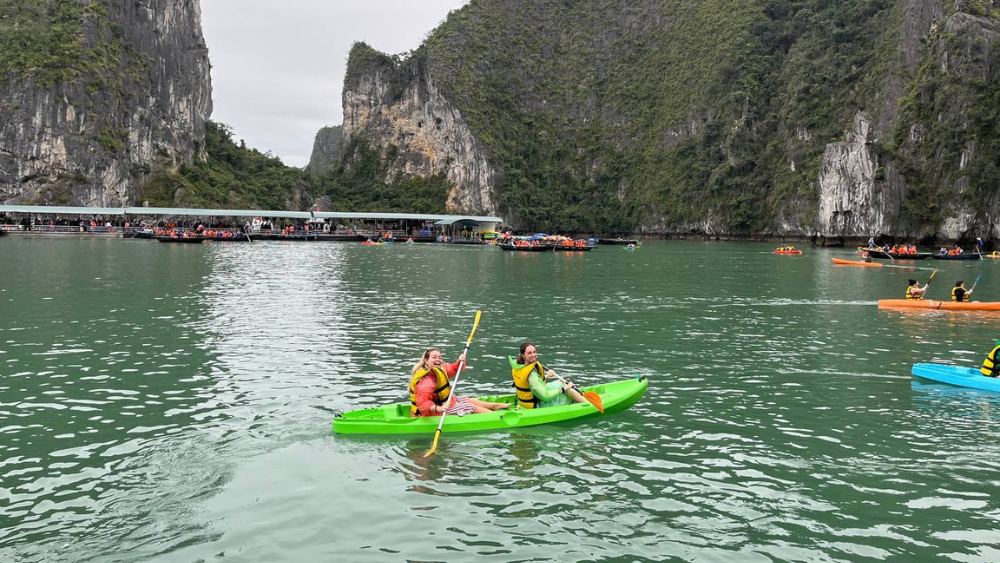
One of the defining cultural highlights was experiencing Hari Raya Puasa in Kuala Lumpur, Chinese New Year in Singapore and Tết in Ho Chi Minh City. Each gave me a window into the region’s traditions and community spirit. I ended the semester with two weeks in Sri Lanka; as a recipient of the Australian Government’s New Colombo Plan scholarship, finishing the journey in Colombo felt fitting and symbolic.
What I will remember most, however, are the people: locals, fellow exchange students and travellers from around the world. The conversations I had with them challenged my assumptions, broadened my perspective and deepened my understanding of cultures, histories and experiences vastly different from my own. Many stayed with me long after I had left a place.
Why did you decide to stay in Singapore after your exchange?
During the semester, Singapore increasingly felt like somewhere I could imagine building part of my future. I hope to pursue an internationally focused legal career and would like to work here one day.
My course in Employment Law and Regulations became particularly useful in this context. It gave me practical insight into Singapore’s employment framework, including the rights and obligations of employers and employees, and made the legal questions around working here as an international employee and visa holder feel much more concrete.
I ended up staying another six months when I managed to secure a Work Holiday Pass. This allows me to complete the final semester of my Law and Biomedical Science degree online through Queensland University of Technology while continuing to build the professional and personal connections I made during my exchange. Choosing to stay is perhaps the clearest sign of how much the exchange shaped me, and of the lasting impression Singapore made on both my personal and professional aspirations.
What advice would you give to students considering an exchange at SMU?
My biggest piece of advice is not to wait for experiences to happen, actively create them. Embrace every opportunity that comes your way and approach the experience with an open mind. The semester passes much faster than you expect, so say yes to programmes, university events and opportunities to meet both local and international students.
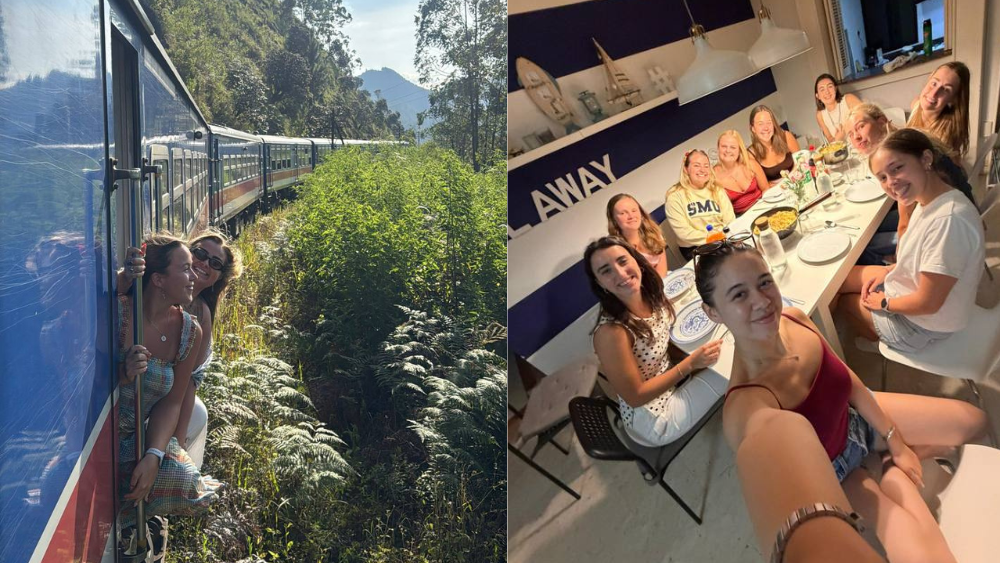
At SMU, do not limit your experience to the classroom. Try new foods at hawker centres, explore different neighbourhoods and celebrate local festivals. Travel when you can, but do not treat Singapore only as a convenient base for going elsewhere. Some of the most valuable parts of my exchange came from understanding the place where I was studying and the people around me.
The academic experience matters, but so do the conversations after class and the friendships that form across cultures. Most importantly, remember that an exchange is not just about the places you visit, but the people you meet and the person you become along the way.