
From Two Weeks in Hanoi to a Semester Abroad: How Jodi Kam Found the Confidence to Go Further
Unsure whether she was ready to study overseas, SMU Business student Jodi Kam chose a two-week Short-Term Study Programme in Hanoi. Navigating a new city, learning alongside Vietnamese students and experiencing local life gave her the confidence to pursue a semester-long exchange in the Netherlands.
Before joining SMU’s Short-Term Study Programme in Hanoi, I was not sure whether I was ready for an overseas learning experience.
I had visited Hanoi as a tourist nearly eight years earlier, but studying there without my close friends felt very different. Since I needed to fulfil my Global Exposure graduation requirement, I thought a two-week programme would be a less intimidating way to begin. I could complete an academic course while experiencing what it was like to live and study overseas.
By the end of those two weeks, I was already thinking about where I might go next.
Taking the first step on my own
I first learnt about the Short-Term Study Programme, or SSP, through an email from the SMU Centre for Global Education and Opportunities.
Among the partner universities, the Vietnam National University, Hanoi School of Business and Management stood out to me because of its focus on business strategy and innovation in an emerging-market context. I was also curious to experience Hanoi beyond what I had seen during a family holiday.
Most of my close friends had other commitments during the winter break, so I applied for the programme on my own. I knew only a handful of the 74 SMU students who were going, and that made me feel quite intimidated at first.
Being selected as a class representative before our departure gave me a reason to reach out to others early. Coordinating arrangements for the trip helped me start conversations and form friendships even before we arrived in Hanoi.
I realised that joining the programme alone did not mean I had to experience it alone.
Seeing a different side of Hanoi
One of the moments that best captures the trip for me was an evening spent eating Làng Nướng, or Vietnamese barbecue.
We sat at roadside tables on low stools in the 17-degree weather. Our local buddy had brought us to a place we would probably never have found by ourselves, which made it feel like a genuine hidden gem.
He introduced us to local dining habits, including the toast “Một, hai, ba, dzô!” — “One, two, three, drink!” — and shared what everyday life in Hanoi was like.
What stayed with me was his willingness to spend time with us outside school. Through these conversations over food, we got to know our local buddies and one another much better.
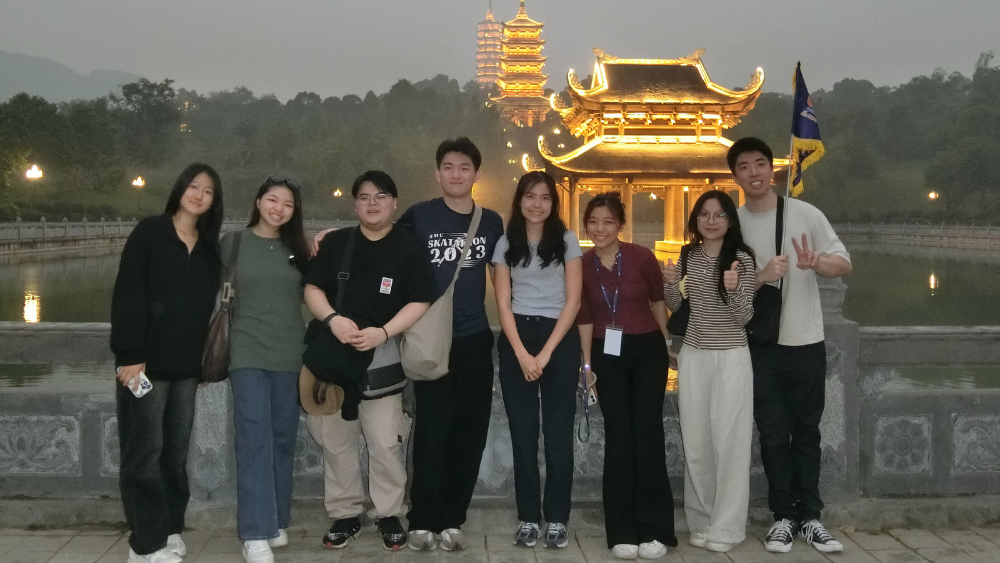
The friendships I formed, both with the Vietnamese students and my SMU peers, became one of the most memorable parts of the programme.
Learning to navigate the unfamiliar
Living in Hanoi for two weeks also meant learning how to manage unfamiliar situations by myself.
I took a Grab bike for the first time, navigated the streets using Google Maps and approached supermarket or hotel staff when I needed assistance. Even simple interactions could take more effort when there was a language barrier.
I learnt to slow down and communicate more simply, whether through basic words, gestures or a smile. Saying “Cảm ơn rất nhiều”, or “Thank you very much”, was a small but useful way to break the ice.
There were moments when things did not go according to plan or took much longer than expected. Over time, I became more patient and more willing to ask for help instead of worrying that I should already know what to do.
These were ordinary situations, but dealing with them each day made me feel increasingly comfortable finding my way around a new city.
Rethinking what sustainability means
One of my biggest academic takeaways was how the programme changed my understanding of sustainability.
Before the trip, I mainly associated sustainability with protecting the environment and conserving resources. Through our lessons, company visits and discussions with our local buddies, I began to see how Vietnamese small and medium-sized enterprises incorporate sustainability into the way they operate.
These businesses still have to manage real constraints, including limited resources and the challenges of operating in an emerging market. This helped me understand that sustainability is not only about environmental initiatives. It can also involve building resilient businesses that create value over the long term.
The classroom experience was also different from what I was used to at SMU.
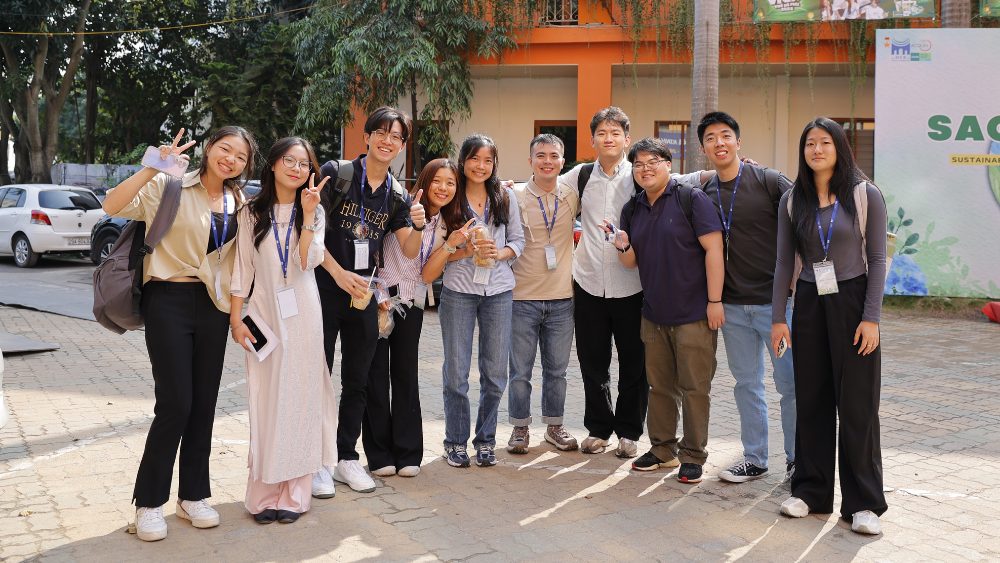
Our lessons included lectures, interactive seminars and group discussions. We worked with Vietnamese students on case studies and presentations, which allowed us to hear perspectives shaped by a different business and cultural environment.
Our local buddies often encouraged us to think beyond a Singaporean context. At the same time, the SMU students brought our own ideas and creativity to the presentations. Some of the results were quite memorable, and my friends and I still laugh about them when we meet.
Connecting lessons with business practice
Learning continued outside the classroom through company visits and educational excursions.
We visited the Vietnam-Singapore Industrial Park in Bac Ninh, which covers an area equivalent to almost 980 international football pitches. We also toured an integrated farm and production facility.
As someone pursuing a Strategy major, I found it valuable to see how businesses turned ideas into actual operating decisions. The visits helped me understand the concepts more clearly than lectures alone could.
They also showed me that businesses do not make decisions in ideal circumstances. They have to consider available resources, local conditions and competing priorities.
That made the lessons feel much more real.
Having structure without losing independence
What reassured me about the SSP was how well structured it was.
SMU arranged key aspects such as accommodation and coordinated with our host university on lectures, company visits and field trips. At the same time, we still had the freedom to explore Hanoi during our free evenings and weekends.
My friends and I went on food adventures, visited local salons and spent time simply experiencing the city together. Pizza 4P’s became one of our favourite places.
That balance worked well for me. I had support when I needed it, but I also had enough independence to learn how to navigate a new environment.
For someone who was hesitant about going overseas, two weeks felt like a manageable starting point.
From Hanoi to the Netherlands
The SSP was my first overseas learning experience with SMU, and it changed what I thought I was ready to do.
Before the programme, even two weeks abroad felt daunting. After returning from Hanoi, I decided to pursue a semester-long exchange in the Netherlands.
The trip also made me more aware of how I communicate with people from different backgrounds. When working with our Vietnamese buddies, for example, I learnt to use less Singlish and to check regularly that everyone understood our project direction.
I began to see cultural sensitivity not as knowing everything about another culture, but as being willing to listen, adjust and communicate more thoughtfully.
The biggest change was probably that I became less hesitant about unfamiliar situations. I learnt that I did not need to know exactly how everything would work before taking the first step.
Sometimes, a shorter experience is enough to show you that you are capable of going further.
Start with a shorter overseas experience
For students who are unsure about committing to a full semester overseas, the Short-Term Study Programme can be a useful first step.
It offers the structure of an academic programme, together with opportunities to experience a different culture, meet new people and learn how to navigate an unfamiliar environment.
For programme enquiries, email smushortterm@smu.edu.sg.