

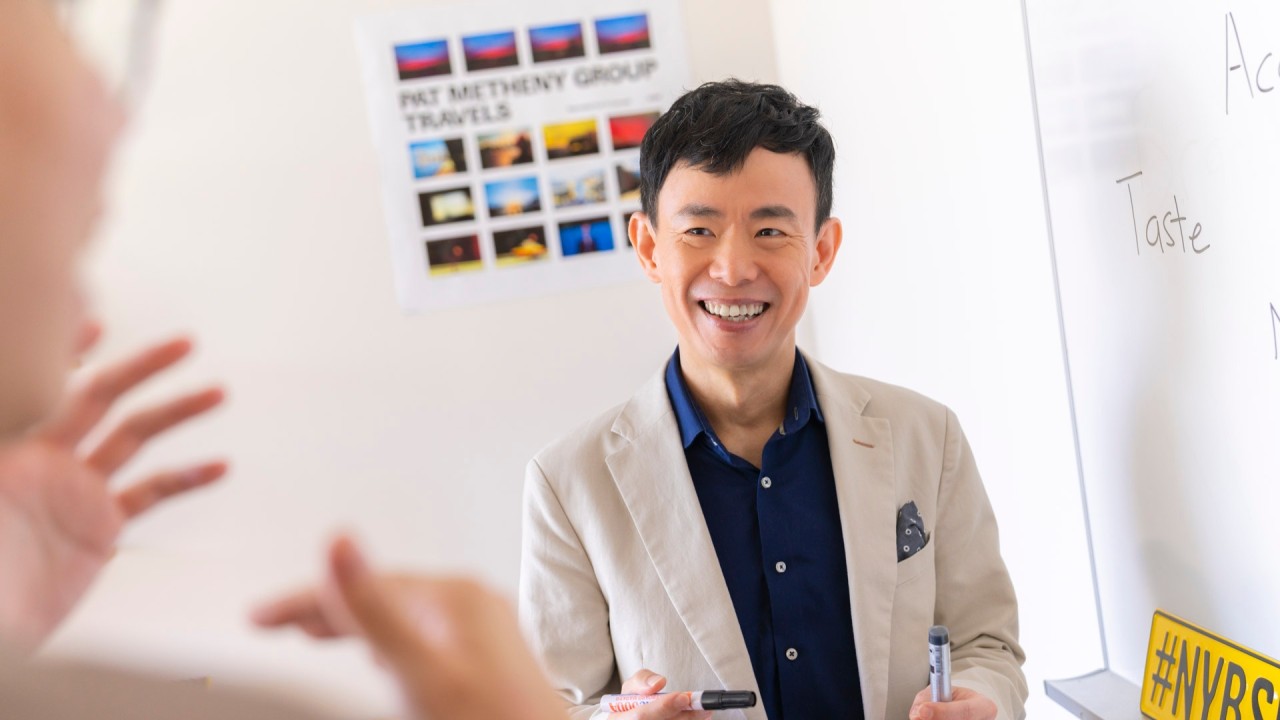
SMU Impact Stories: Eating, Creating, Believing – Professor Mark Chong Makes Sense of How People Respond to Novel Technologies
Professor Mark Chong’s work at SMU explores how people embrace change – not through prediction, but through meaning. From cultivated meat to learning design, his research shows that the acceptance of new ideas is driven by identity, emotion, and social context. When people are given the space to explore without fear, new possibilities emerge.
Understanding human behaviour, for Professor Mark Chong from Singapore Management University (SMU), has never been about predicting actions. It is about understanding how people make meaning — how identity, emotion, and social context quietly shape the choices we make, even when we believe we are acting rationally.
His work explores these questions across domains that appear unrelated at first glance: sustainable food, sensory experience, generative AI, and learning environments. Yet a consistent thread runs through all of them: people adopt new ideas not because they fully understand them, but because those ideas make sense to who they are — or who they hope to become.
The turning point that reshaped his understanding of learning
As a teenager, Mark grew up in an environment where correctness was prized over curiosity. “I wasn’t good at that game,” he admits. When the usual routes into local university didn’t materialise, he found himself on an unexpected path — one that would fundamentally reshape how he understood learning.
In Canada, during his first year of university, a professor looked at his answer and said, “I’m not interested in this. I want to know how you got there.” That moment cracked open a world he had not encountered before: learning as inquiry, not performance.
It planted a conviction that now runs through all of his work at SMU — from research to teaching to conversations about the future of education.
From social image to the dining table: understanding acceptance of food innovation

When Mark ventured into sustainability research, cultivated meat became an unexpectedly rich lens through which to examine human behaviour.
In his 2022 cross-country study on lab-grown meat, he found that Singaporeans were more open to cultivated meat than consumers in the United States. The key driver? Social image motivation — a desire to be seen as informed, progressive, or aligned with national innovation narratives.
“Singaporeans have a strong social image motivation,” he notes. “There’s pride in being early adopters — in being seen as ahead of the curve.”
Interestingly, the messenger mattered far less than expected. Whether a scientific expert or a celebrity endorsed the product, the study revealed a deeper truth about communication: facts may inform, but social image motivation drives behaviour.
When tasting changes the mind
To explore how first-hand experience influences trust, Mark’s 2024 study examined diners’ reactions as they tasted cultivated chicken for the first time. The results were immediate and measurable. A single tasting increased acceptance by nearly half a point on a five-point scale.
Or as he puts it: “Eating is believing.”
The findings also challenged industry assumptions that familiarity — presenting cultivated meat in formats like nuggets or dumplings — is the key to acceptance. In reality, taste mattered more than format. The sensory impression created by the first bite shaped perceptions far more powerfully than the shape of the dish.
For policymakers and innovators, this insight reframes public engagement: technological breakthroughs require strategies that build sensory experience as much as cognitive understanding.
When technology lowers fear and raises risk-taking
Although his research spans sustainability and communication, Mark approaches generative AI with the same underlying question: how do people respond to novel technologies?
In a recent study on Generative AI and intellectual risk-taking, he examined how tools such as ChatGPT influence students’ willingness to take creative risks.
By attributing rough drafts or imperfect ideas to the tool, students felt less judged — and when social risk decreases, intellectual risk-taking increases. Students were more willing to try unconventional approaches, challenge assumptions, and experiment with creative directions.
This effect was especially evident among women who traditionally participate less in classroom discussions, suggesting that generative AI may serve as a participation leveller when used thoughtfully.
Mark connects this to what he calls X-shaped learning — an evolution from the older idea of “T-shaped” graduates.
“AI intersects every domain,” he explains. “We need people who can navigate human-machine and disciplinary convergence, not avoid it.”
This shift has implications for assessments as well.
“If AI can generate content, we shouldn’t be grading the content alone. We should be evaluating reasoning, originality, and ethical judgement,” Mark adds.
A longstanding instinct for experiential learning
Long before experiential learning became a university-wide movement, Mark had been weaving real-world projects into his classes. His early collaborations connected communication students with industry partners on cross-cultural storytelling, social-impact narratives, and live briefs.
“When SMU-X was launched, it felt like a homecoming,” he recalls. “It gave an institutional framework to something I had always believed in — bridging theory and practice.”
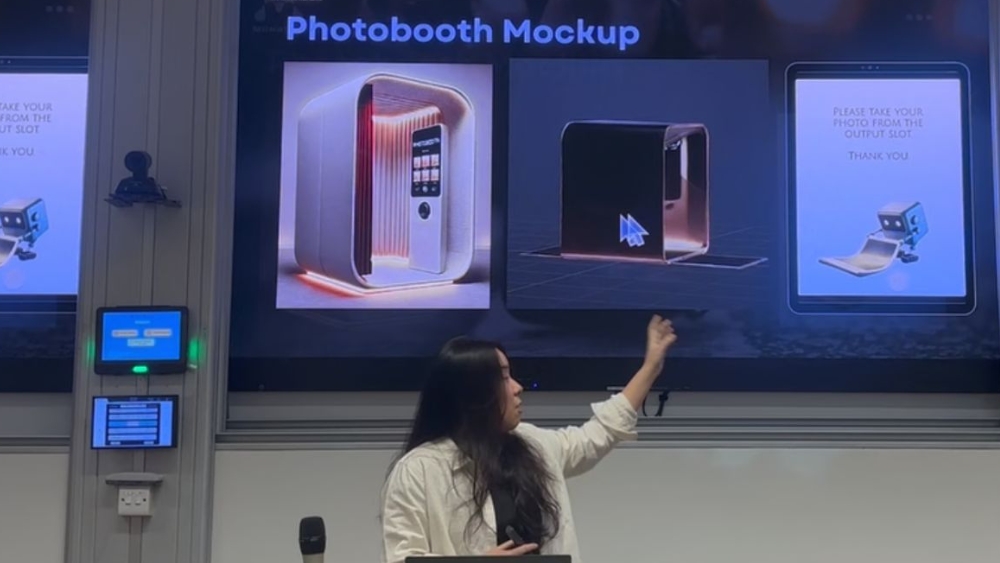
His partnership with Publicis Groupe extended this ethos into the age of AI, enabling students to experiment with professional tools such as Runway, Eleven Labs, HeyGen and ChatGPT, while navigating the creative tensions that arise when technology becomes a collaborator rather than a mere tool.
Seeing the human story behind every innovation
Across his body of work, a consistent principle emerges: innovation succeeds when it resonates with how people see themselves and their perception of risk.
For sustainable food, this means understanding how social image motivations shape acceptance.
For education, it means recognising how generative AI reshapes intellectual risk-taking.
For learning design, it means creating environments where curiosity outweighs self-protection.
Impact, for Mark, is not a separate category to be appended at the end of a narrative.
It is threaded through the work itself — in the questions asked, the behaviours uncovered, and the new possibilities that emerge when people are given the space to explore without fear.
Curiosity, adaptability, and courage
Looking ahead, Mark believes that the most important qualities for communicators and learners remain timeless: curiosity, adaptability, and the courage to step into discomfort.
“Impact rarely comes from doing what is easy,” he says. “It comes from asking difficult questions — about ethics, culture, and meaning — and pursuing answers even when they make us uncomfortable.”
Whether analysing why a diner accepts an unfamiliar piece of cultivated chicken, examining how AI reshapes creativity, or guiding students to find their intellectual voice, his work ultimately asks a deeper question: What helps people accept change — and accept it more readily?
And sometimes, the first step towards accepting something new is as simple as taking a bite.
The SMU Impact Stories series spotlights the journeys of our faculty, alumni, students, and partners who are driving positive change through education, research and community engagement. Each story offers a window into the values that define Singapore Management University — from academic excellence and inclusive leadership to real-world impact and global relevance. Discover more stories here.