

How Mentorship Helped an SMU MITB Student See His Career More Clearly
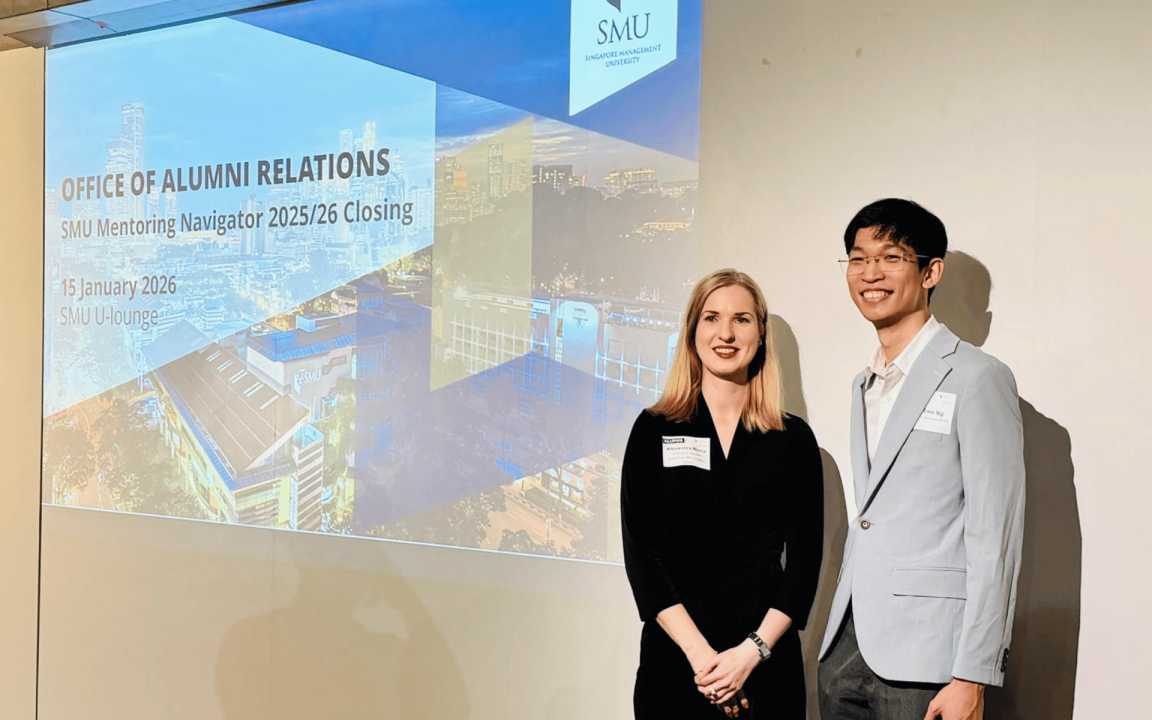
When SMU MITB student Ng Jee Kinn joined the SMU Mentoring Navigator programme, he was not looking for a ready-made career plan. Through candid conversations with mentor Alexandra Mercz, he gained fresh perspectives that helped him see his choices and future direction more clearly.
When Ng Jee Kinn joined the SMU Mentoring Navigator programme, he was not looking for someone to give him a ready-made career plan.
Having moved from engineering and data analytics in manufacturing into the Master of IT in Business programme at Singapore Management University, he was already stepping into new territory. What he wanted was the opportunity to learn from someone with experience beyond his immediate academic and professional circles.
He found that perspective in Alexandra Mercz, Head of Risk, Assurance & Compliance at Cushman & Wakefield, graduate of the joint Directorship Programme by the Singapore Management University and the Singapore Institute of Directors.
Their mentoring relationship did not revolve around a dramatic turning point or a single piece of life-changing advice. Instead, it developed through a series of thoughtful, candid conversations that helped Jee Kinn reflect more deeply on his choices, professional presence and future direction.
For both mentor and mentee, the experience demonstrated that meaningful mentorship is not simply about finding the right match. It is about what both people bring to the relationship.
A purposeful first connection
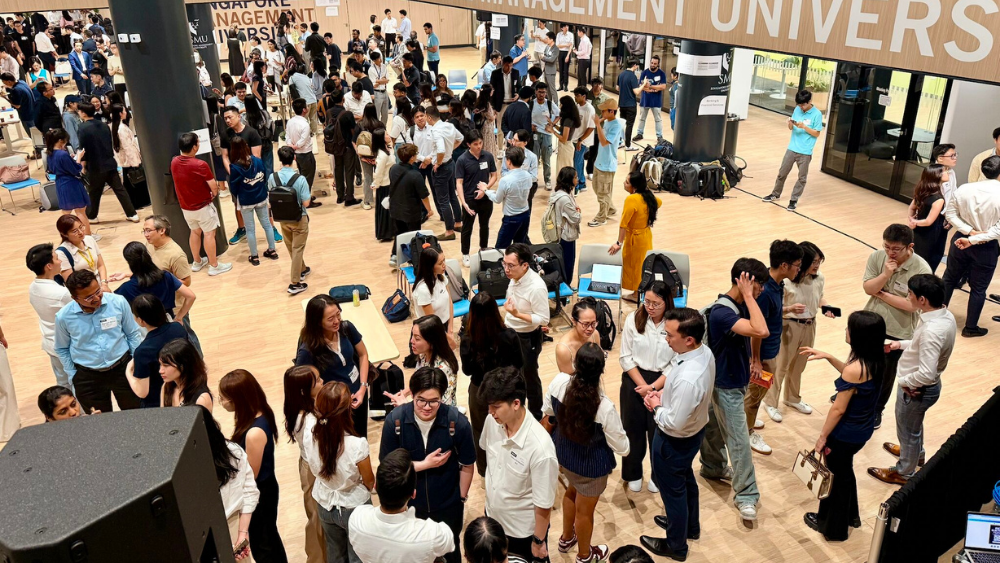
Jee Kinn first encountered Alexandra’s profile before attending the programme’s mentor–mentee mixer.
At the time, he had recently begun an internship at SGX as a Risk Policy intern. Alexandra’s experience in risk management immediately stood out.
“She came across as an accomplished and confident risk professional,” Jee Kinn recalls. “I was hoping to connect with someone who could share perspectives from a more senior level.”
He arrived at the mixer prepared. Before Alexandra had even collected her name tag, Jee Kinn approached her, introduced himself and explained why he hoped to learn from her.
That initiative made an impression.
“He had done his research,” Alexandra says. “He understood my background. More importantly, he was clear about why he wanted to connect and what he hoped to achieve.”
For Alexandra, this demonstrated more than confidence. It showed intention.
She had returned to SMU as a mentor because she wanted to contribute to a community that had shaped how she thought, made decisions and navigated complexity. Her own career had moved across industries and roles, often at the intersection of technology, risk and business transformation.
She understood that careers do not always follow a straight line. Progress often comes from making considered choices, staying open to new possibilities and learning how to move through uncertainty.
That perspective resonated with Jee Kinn’s own journey.
Creating a mentorship that worked for both sides
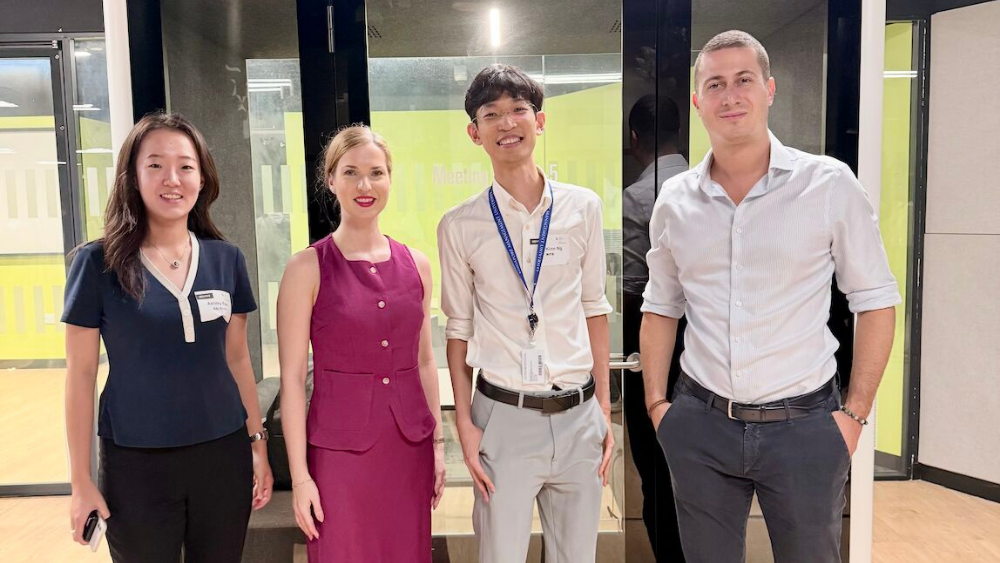
From the beginning, Alexandra and Jee Kinn were deliberate about how they wanted the mentorship to work.
They agreed to meet monthly. Each conversation would have a clear purpose, and both would arrive prepared.
“One thing I appreciated from the start was how frank and clear Alexandra was in setting expectations,” Jee Kinn says. “That helped me understand how to navigate the mentorship and make the most of our time.”
The clarity also created space for honesty.
Without a work project, organisational target or fixed deliverable shaping their discussions, they could speak openly about career direction, communication, professional development and personal growth.
For Jee Kinn, this was different from the coaching and mentorship he had received in the workplace, which was naturally shaped by project needs, team priorities and role responsibilities.
“This was a mentorship relationship that Alexandra and I could shape together,” he says. “There was no fixed work agenda behind the conversations.”
The relationship was also grounded in mutual respect.
Jee Kinn made a point of arriving with questions and topics he wanted to explore. Alexandra, despite her seniority and professional commitments, brought the same level of preparation and focus.
“As a mentee, I think it is important to show up prepared and make good use of your mentor’s time,” Jee Kinn says. “What I appreciated was that Alexandra extended the same respect to me.”
For Alexandra, the relationship reinforced that mentorship works best as an exchange rather than a one-way transfer of knowledge.
“There were moments where I challenged his assumptions,” she says. “There were also moments where his questions challenged mine.”
Learning to see decisions from another perspective
The value of the mentorship emerged gradually. There wasn’t a single conversation that changed Jee Kinn’s career direction. Instead, the consistency of their discussions helped him better understand how a senior professional approached people, communication, trade-offs and career choices.
Alexandra did not present her own journey as a model he should follow. She first sought to understand his goals, his definition of success and what growth meant to him.
“She asked questions, listened carefully and shared her perspectives in a way that was relevant to my goals,” Jee Kinn says. “I felt seen as an individual.”
Those discussions helped him become more aware of how professionals are perceived, how communication shapes opportunities and how decisions may look from a senior manager’s perspective.
At the same time, the mentorship reinforced an equally important lesson: a mentee must remain responsible for his or her own path.
“A good mentor can guide, challenge and support you,” Jee Kinn says. “But you still need to be confident in your choices and responsible for your own growth.”
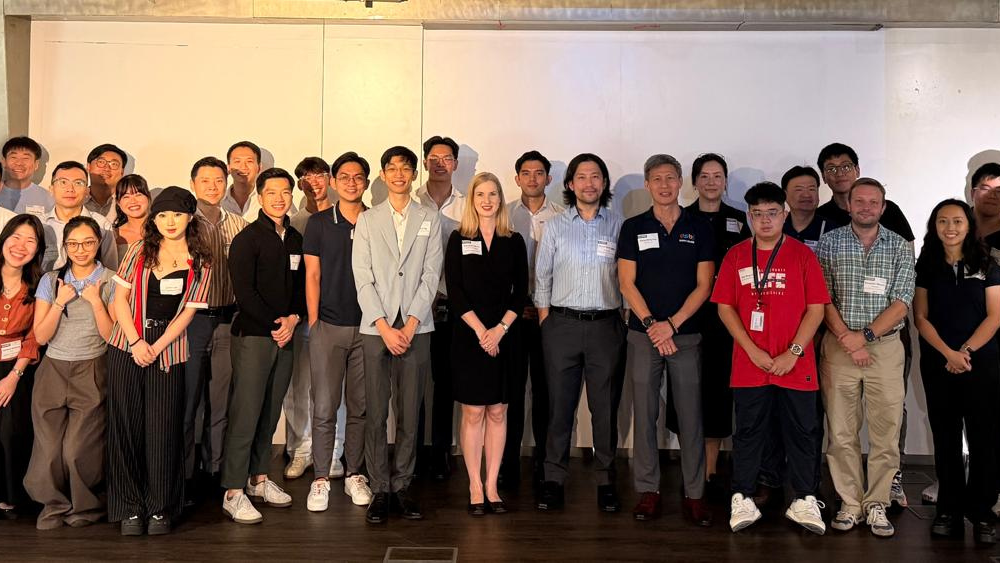
Stretching beyond familiar territory
The mentorship also encouraged Jee Kinn to make fuller use of his MITB experience.
Before starting the programme, he had promised himself that he would remain open to opportunities beyond coursework and expose himself to unfamiliar perspectives.
One such opportunity arose when he was choosing elective modules for the January 2026 term.
Although he did not come from a legal background, Jee Kinn was interested in the regulatory dimensions of technology and wanted to challenge himself by taking a law module. He discussed his options with Alexandra before making his decision and eventually selected the module she suggested.
“I really enjoyed the experience,” he says. “It reinforced my belief that this is a good time for me to stretch myself and try areas that may initially feel unfamiliar.”
For Alexandra, this willingness to move beyond a core discipline reflected the kind of deliberate growth that mentorship can support.
Jee Kinn was pursuing an interdisciplinary postgraduate education while exploring areas such as foreign investment law, fintech regulation and risk. Rather than simply accumulating knowledge, he was learning how different fields connected.
Their conversations helped him think about how to position those experiences and explain the relationship between his skills, interests and future opportunities.
Mentorship as part of the wider MITB journey
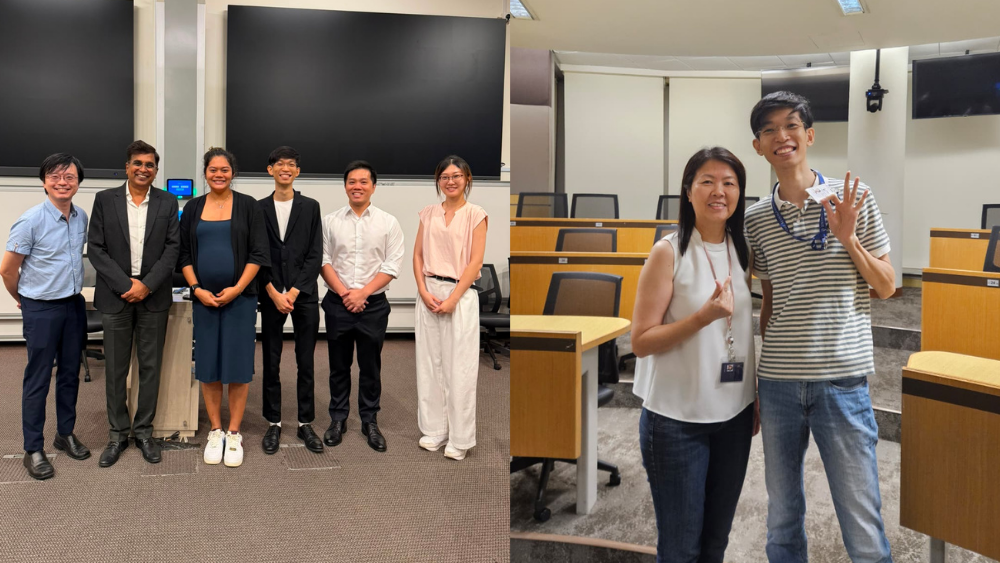
Right: Jee Kinn (right) with Professor Michelle Cheong, Associate Dean of the MITB programme, after completing his final examination for the Applied Data Science in Operations module.
For Jee Kinn, the experience showed that postgraduate education can extend well beyond the classroom.
The SMU Master of IT in Business programme gave him the opportunity to develop expertise across business and technology. Through the mentoring programme, he was also able to engage directly with an experienced industry leader and explore questions that were personal to his own professional journey.
“This mentorship reinforced my view that the MITB journey can be very holistic if you make the effort to seek out different experiences,” he says.
The experience did not give him a fixed formula for success. Instead, it gave him access to a trusted professional outside his immediate circles who could listen, ask difficult questions and offer an honest perspective.
That combination of academic learning, industry exposure and personal reflection helped him approach his development more intentionally.
What makes mentorship meaningful
Looking back, Alexandra and Jee Kinn agree that the success of a mentoring relationship depends on shared ownership.
A mentor can offer experience, perspective and challenge. The mentee must bring curiosity, preparation and a willingness to reflect.
“Mentorship works when both sides show up with purpose,” Alexandra says. “It works when mentees take ownership of their growth and when mentors invest not only time, but thought and attention.”
Jee Kinn offers similar advice to students considering the programme.
He recommends approaching the experience with an open mind, setting expectations clearly and taking the initiative to prepare for each conversation.
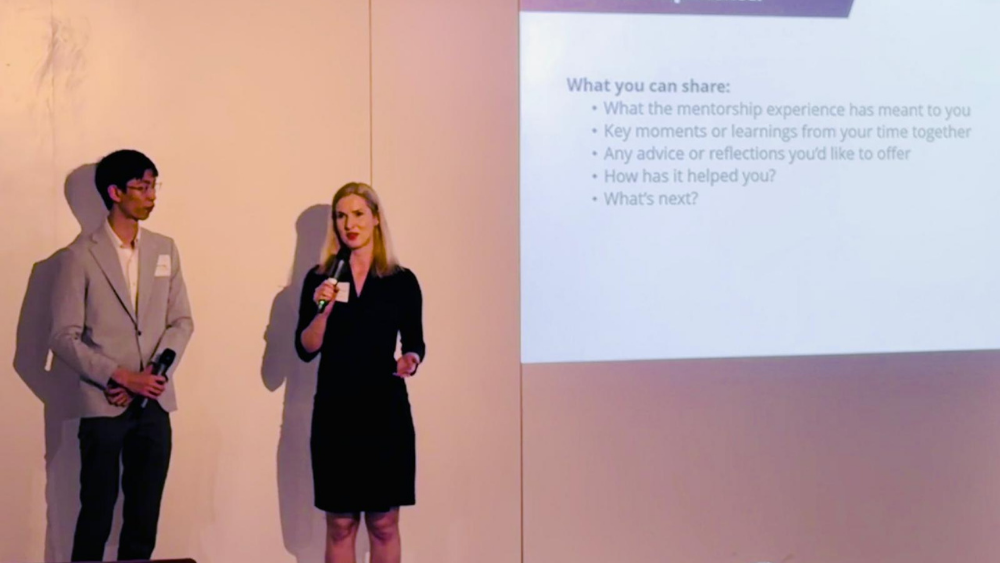
“The value of mentorship depends on the people involved, the expectations set and the effort both sides put into the relationship,” he says.
For him, the decision to introduce himself to Alexandra at the mixer was a small but important act of initiative.
What followed was not a prescribed journey, but a professional relationship shaped over time by trust, openness and mutual respect.
And that may be where mentorship creates its greatest value: not by telling someone exactly where to go, but by helping them see their choices more clearly as they decide how to move forward.