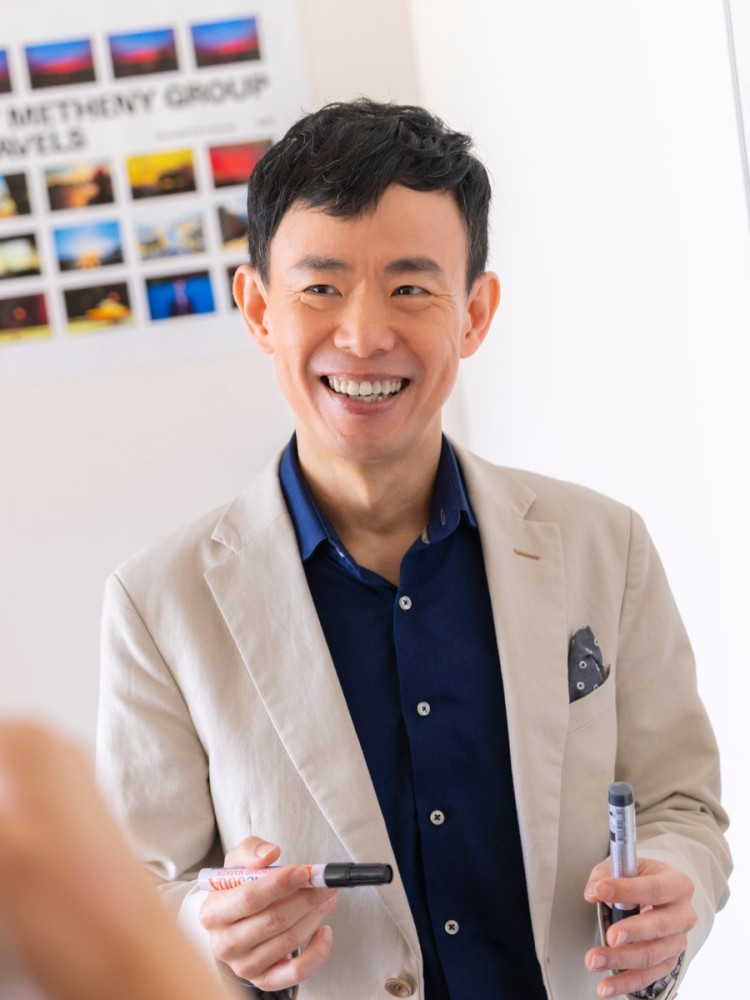

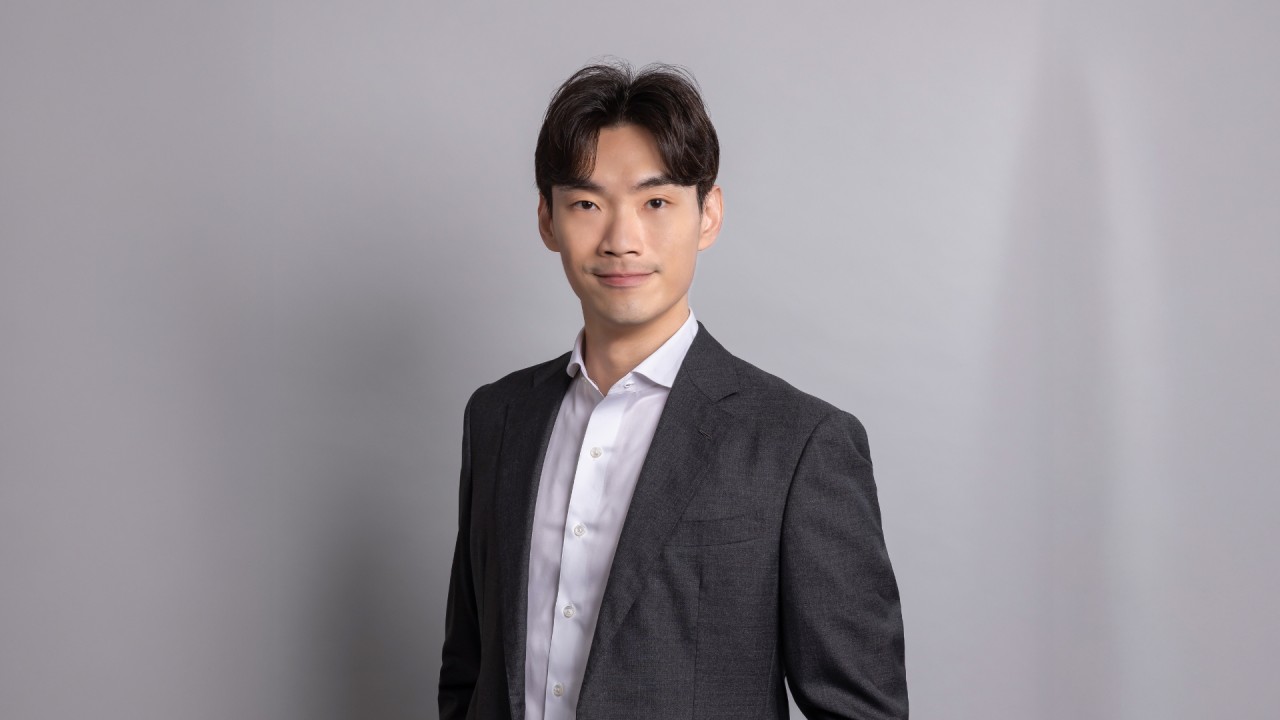
Kenny Chng was the student who dreamed of returning to teach. As the first graduate of the Yong Pung How School of Law to be awarded tenure, he is now in the business of making sure his students believe in what they can become — before they do.
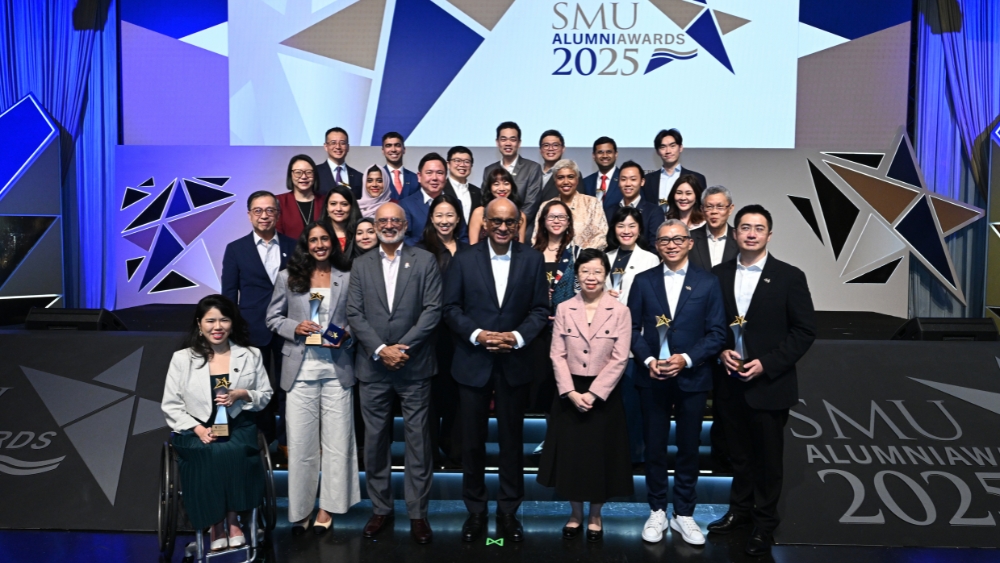
During his time as an undergraduate at the Yong Pung How School of Law, Kenny Chng sat in a seminar watching a professor work through a problem with the class. As he observed the professor taking the class through a clear and incisive analysis of the question, he thought to himself, “how wonderful it would be if I have a chance to do this one day!”
He was still a student. There was a Navy scholarship bond to serve, no obvious route into academia, and an aspiration that felt, as he puts it, like “a very distant, impossible kind of dream.”
More than a decade later, Associate Professor Kenny Chng is a member of the faculty he once studied under — the first graduate of the Yong Pung How School of Law to be appointed to a tenure-track position and awarded tenure. It is a distinction that carries weight on two fronts.
“Our education is good enough that we are willing to hire our own graduates and give them tenure. To me, that is an indication of a strong school, one that is confident in its own quality.”
What drew him to law, and to SMU
Kenny came to law to learn a new way of thinking. “Many people think that law is about memorising a lot of legal rules,” he says. “The legal rules are certainly important. But more fundamentally, law is a certain kind of thinking. I was interested in that. I thought it would be nice if I could learn how to think in the way that the law requires.”
When he applied to the Yong Pung How School of Law, the school was new and he was in the second batch of students. That newness was part of its appeal. “I thought that since this law school is new, perhaps there will be opportunities here that won’t be available elsewhere. The school might be more dynamic, more creative in how it teaches.”
What he found in the school’s seminar rooms confirmed the instinct. Small classes. Professors who pushed students not just to know the law, but to master it — to make a case, hold it under pressure, and rebuild it when it broke. And alongside the rigour, something he had not quite expected: professors who treated students as people worth taking an interest in. “That suggested to me,” he says, “that professors can be kind, and good, and brilliant, all at once.”
The road from student to faculty
Directly after graduating, Kenny joined the Republic of Singapore Navy as a Naval Officer — a commitment he had entered into before commencing law school. The Navy gave him many exciting opportunities, including one which he had not anticipated: he was appointed in 2013 as Legal Advisor to an international task force countering piracy in the Gulf of Aden. He found himself applying the analytical skills he had learnt at SMU to problems with real operational consequences.
When the Ministry of Education launched the MOE-START Overseas PhD Scholarship — a programme designed to support Singaporeans pursuing careers in academia — the timing aligned exactly with the end of his Navy commitment. He applied, was selected, and in 2017 went abroad to pursue his LLM at Harvard Law School.
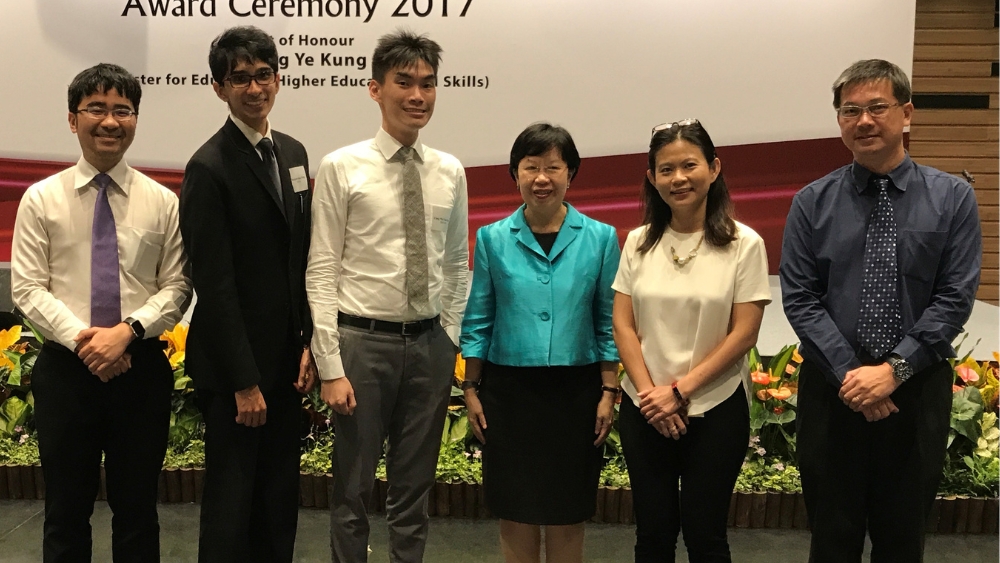
Harvard, he says, taught him to see the law differently. “The intellectual focus there is very much on breadth — seeing the connections between law and other disciplines. For example, law and society, law and economics, law and politics. I observed that it is possible to understand the law more deeply not just through its internal logic, but by taking broader perspectives to it from different disciplines.”
At Harvard, he received the Dean’s Scholar Prize as the top student in the Public Law Workshop course. Graduating in 2018, he returned to join the SMU faculty as an Assistant Professor of Law.
He is currently completing his DPhil at the University of Oxford — supported by the Yong Pung How Fellowship — where his work focuses on judicial review and administrative policies.
Oxford provides a different kind of pressure. “I think Oxford is where rigour and precision in the law find their full expression. I am pushed, constantly, to be clearer, more precise, more analytical. I find that very invigorating.” For exceptional academic performance on the DPhil, he was awarded the Senior Hulme Scholarship by Brasenose College, his college at Oxford.
Through all of it, he reflects, something has stayed constant. “I continue to build today on what I learned at the Yong Pung How School of Law.”
Research with impact
Kenny’s research is on constitutional and administrative law — the body of law that governs the relationship between citizens and the state, and defines the limits of public power. The question of why he chose this field has both a practical answer and a principled one.
“I find it intrinsically interesting, because it is about the government’s relationship with us,” he says. “It concerns rights and duties that are relevant for everyone.” He also saw a practical need in this area: while there are excellent scholars in this field in Singapore, there is a need for more scholars to help develop this increasingly complex area of law.
That contribution has been recognised beyond Singapore. His work appears in leading international journals including the Law Quarterly Review, Legal Studies, Public Law, and the International Journal of Constitutional Law. His research has been cited with approval by the High Court of England and Wales and the Singapore Court of Appeal — a signal that his scholarship is shaping how law is interpreted and applied in practice, not merely in academic debate.
His view of the law’s role in governance is that it should be precise and deliberately bounded. Law identifies when a public body has acted impermissibly. In other words, it sets the baseline for governance. But good governance is about what lies beyond that baseline. And this is not strictly the domain of law. “That is the job of public administrators. They have the expertise. The law’s role is to be clear about the legal limits of government action. Going further is not what the law is for — and the law itself recognises that.”
Teaching as transformation
The thing Kenny says he enjoys most about teaching is witnessing the moment of realisation when students understand something that they did not before.
“I try not to tell them the answer to questions. I want them to get it for themselves.” He asks questions. Sometimes, he offers clues to help students along. And then he waits — perhaps longer than students expect. The discomfort is deliberate. “It can be a bit painful sometimes — I completely understand that. But when I see that they do reach the conclusion, that gives me a lot of satisfaction.”
He recognises where this approach comes from. His own supervisor at Oxford prizes excellence and returns every draft with lists of detailed comments for improvement. The students he supervises on directed research modules — elective courses in SMU’s law programme which allow students to write long research papers under the direct supervision of a faculty member — receive the same treatment. “For those who persevere, I hope they can be encouraged by their growth, to see that their own end product is so much better than their first drafts.”
His multiple teaching awards at SMU — including both the University’s and the School of Law’s highest teaching awards — reflect an approach that students evidently find demanding and valuable in equal measure.
But there is a dimension to Kenny’s teaching that sits outside the awards criteria. He looks, actively, for the students who are stronger than they believe themselves to be.
“Many students may actually be very strong, but think that they are weak. I try to look out for such students, and help them in small ways to become more confident in themselves. I hope they will carry that confidence with them — even after the classroom.”
The classroom can do something a textbook cannot: see a person clearly, and help them see themselves the same way.
What tenure means
When Kenny was appointed as an Associate Professor in 2024, he became the first graduate of SMU Law to hold a tenured position. He speaks about it with the kind of care he brings to each question — thinking about what the answer actually means before giving it.
“It is a great privilege. It speaks of the trust that the University has placed in you. It is also a validation of all the work that I have put into research and teaching over the past years.”
But the larger significance, for him, is what it says about the institution. A school that once had to prove itself has produced a scholar it now wants to keep, develop, and trust with the next generation. That is not an abstract claim. It is what Kenny’s presence at the front of a seminar room looks like.
He is now the one a student is watching. Working through a problem with the class. Waiting for the moment the student arrives at an answer on their own. And somewhere in that room, in every cohort, there is likely someone thinking: I want to do that one day.
The SMU Impact Stories series spotlights the journeys of our faculty, alumni, students, and partners who are driving positive change through education, research, and community engagement. Discover more stories here.