

How Three SMU Students Turned an Internship Insight into an Award-Winning Legal Aid Idea
While interning at the Ministry of Law, three SMU students noticed that many people were navigating complex legal processes without a lawyer. Drawing on their backgrounds in Law and Accountancy, they turned that insight into LegalSave, an award-winning proposal to support Singapore’s underserved “legal middle”.
During an internship at Singapore’s Ministry of Law, three Singapore Management University students began noticing the same troubling pattern.
Some people navigating insolvency proceedings had lawyers to guide them. Many others were handling complex applications on their own because they could not afford legal representation.
For Nicole Poon, Toh Yue Tai and Ong Jun Quan, what began as administrative work soon revealed a broader access-to-justice challenge: what happens when Singaporeans who earn too much to qualify for legal aid, but not enough to comfortably afford private legal services, run into legal problems?
That observation became the starting point for LegalSave, an award-winning proposal that combined legal knowledge, financial modelling and audit principles to explore a new way of supporting this underserved group.
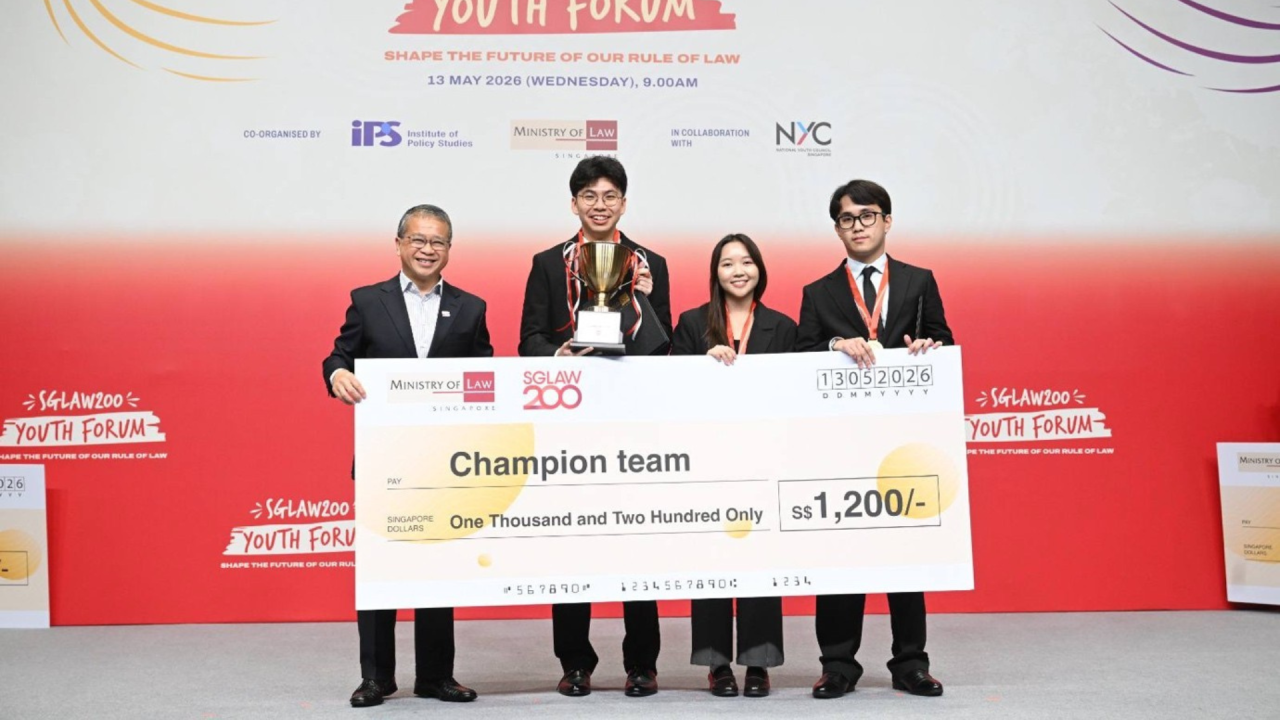
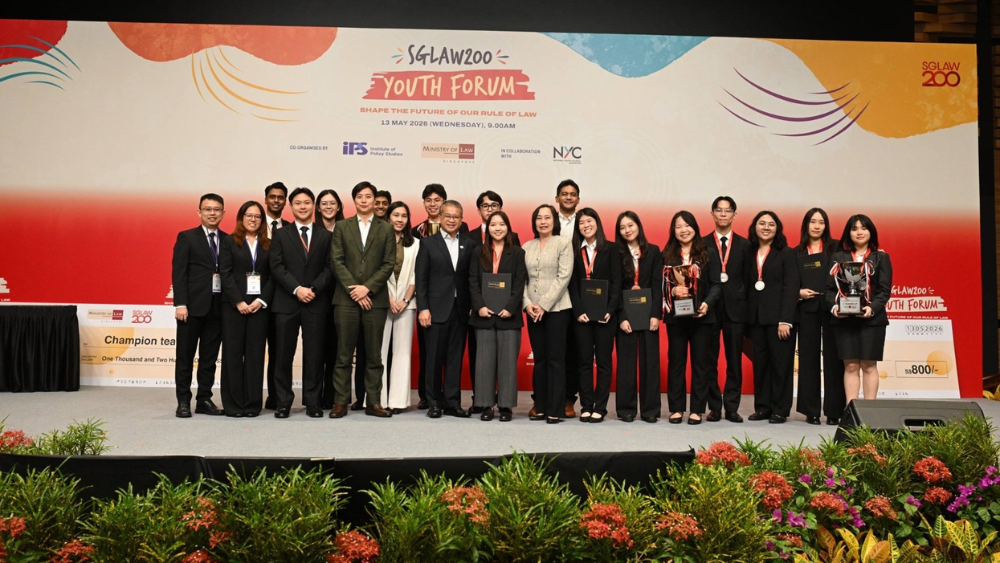
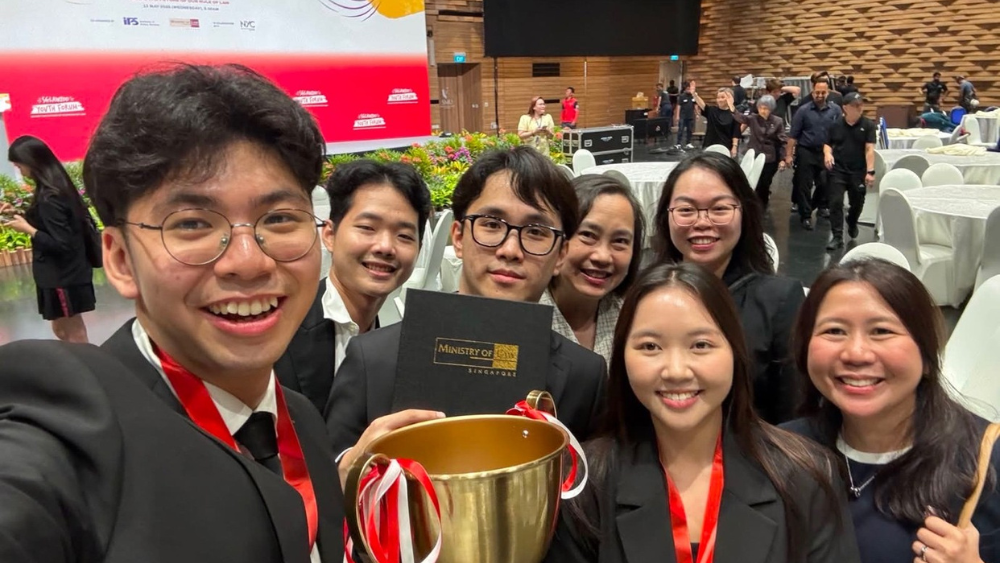
On 13 May 2026, the team won the Ministry of Law Ideation Challenge at the SGLaw200 Youth Forum, one of several events being held this year to mark the bicentenary of Singapore’s modern legal system. The Forum invited young people to come together to help shape the future of justice.
Their proposal responded to the challenge statement, “The Legal Middle: Building Bridges to Justice”.
How an internship revealed an access-to-justice gap
Nicole and Yue Tai are Accountancy students, while Jun Quan studies Law. All three met while interning at the Ministry of Law’s Insolvency and Public Trustee’s Office.
As part of their work, they processed insolvency filings and assessed applicants’ eligibility for the Debt Repayment Scheme. This gave them a close-up view of the difficulties people could face when navigating legal and administrative processes without professional support.
“You would see someone handling an application on their own because they could not afford a lawyer,” Nicole recalled. “By conducting the means-testing ourselves, we gained a real sense of how difficult the situation could be.”
The students saw people caught between two difficult realities: they needed legal assistance, but paying for it could place further strain on their finances.
When Jun Quan later shared details of the SGLaw200 Ideation Challenge in their group chat, the three students decided to turn what they had observed into a potential solution.
“We thought we could put down what we had seen and consider how the problem might be addressed,” Yue Tai said.
Reimagining support for the “legal middle”
Their proposal, LegalSave, drew inspiration from MediSave and its underlying principle of preparing for essential but unpredictable needs.
The team recognised some similarities between healthcare and legal services: both can be costly, difficult to anticipate and crucial to an individual’s well-being.
“The core concept came from recognising that healthcare and justice can involve similar market challenges,” Yue Tai explained. “Both can be expensive, essential and unpredictable.”
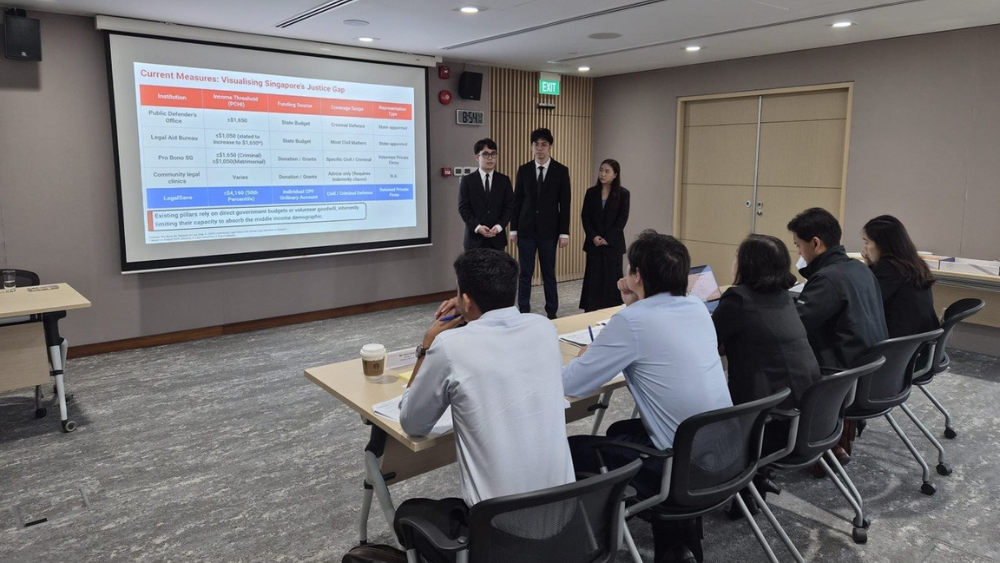
LegalSave was designed as a targeted proposal to complement existing forms of legal support rather than replace them. The team considered how eligibility might be assessed, what safeguards would be required and how the model could remain financially sustainable.
They proposed automating parts of the means-testing process while retaining professional human judgement when assessing the legal merits of a case. This distinction was important because financial eligibility can be evaluated through defined criteria, while the merits and circumstances of a legal matter require more nuanced assessment.
The team also developed a three-stage filtering process intended to discourage frivolous applications and reduce the risk of the system being misused.
How Accountancy and Law strengthened the proposal
The strength of LegalSave came not only from the idea itself, but from the different ways in which the three students approached the problem.
Jun Quan helped the team understand existing legal frameworks, how current schemes functioned and the checks and balances that would be required. He also assessed whether their ideas were legally sound and compatible with established legal principles.
Nicole drew on her audit experience to examine the proposal’s internal controls.
“When Jun Quan proposed the eligibility criteria, I asked the uncomfortable questions,” she said. “How do we prevent people from gaming the system? What is the audit trail?”
Her questions helped shape the safeguards supporting the team’s proposal.
Yue Tai provided the financial and economic analysis. He modelled potential cash-flow effects, projected withdrawal volumes and considered how the proposal might affect longer-term financial adequacy.
His analysis gave the team a numerical foundation on which to refine their eligibility criteria and controls.
“None of us could have designed LegalSave by ourselves,” Yue Tai said. “We needed the legal, controls and finance perspectives.”
Designing for justice, not just financial returns
For Nicole and Yue Tai, the challenge differed significantly from the stock-pitch and business case competitions in which Accountancy students might typically participate in.
Such competitions often ask participants to assess a commercial opportunity, model its financial outcomes and recommend a course of action. The Ministry of Law challenge required the team to consider a wider and more complex set of consequences.
“In legal policy, you are optimising for justice, which is much harder to quantify than profit,” Nicole explained. “How do you measure access to justice? How do you balance individual rights with the sustainability of the wider system?”
The team had to ensure that its proposal was not only innovative, but also legally sound, financially viable and capable of addressing unintended consequences.
The judges questioned the finalists on edge cases, implementation challenges, interactions with existing legislation and possible effects on the administration of justice.
“That forced us to think with a rigour we had not encountered in business competitions,” Yue Tai said. “Every design choice had to withstand legal, ethical, social and policy examination.”
The students also had to consider the needs of a wide range of stakeholders, including members of the public, courts, law firms, ministries and community organisations.
Rather than treating these differing concerns as obstacles, the team incorporated them into the design process.
Why multidisciplinary learning matters
The students’ collaboration extended beyond their degree programmes.
Having entered SMU through both polytechnic and junior college pathways, they brought different educational experiences, approaches and questions to the discussion.
These differences enabled them to examine the same problem from several perspectives and challenge one another’s assumptions.
“It reminded us that the hardest problems require the widest lens,” Nicole said. “Innovative solutions can come from unexpected combinations of expertise and backgrounds.”
Their experience reflects the value of learning beyond disciplinary boundaries. Legal knowledge helped the team understand what was permissible and practicable.
Accountancy principles helped them build controls, test assumptions and evaluate sustainability. Their internship experience ensured that the proposal remained grounded in a problem they had observed first-hand.
Together, these perspectives turned a pattern noticed while processing paperwork into a proposal capable of contributing to a wider policy conversation.
Turning observation into impact
By winning the Ministry of Law Ideation Challenge, Nicole, Yue Tai and Jun Quan achieved more than recognition for a competition entry.
They demonstrated how students can draw on real-world experience, combine knowledge across disciplines and develop ideas in response to complex societal challenges.
Their proposal has not redesigned Singapore’s legal aid system. It has, however, introduced a thoughtful possibility for discussion: how might society better support people who sit between existing legal aid provisions and the cost of private legal services?
As Singapore reflects on two centuries of its modern legal system, LegalSave points towards what could come next — and what becomes possible when young people are invited to help shape that future.
At SMU, students are encouraged to connect knowledge across disciplines and apply what they learn to challenges beyond the classroom.
Explore more stories of how the SMU community is developing ideas that create meaningful impact.